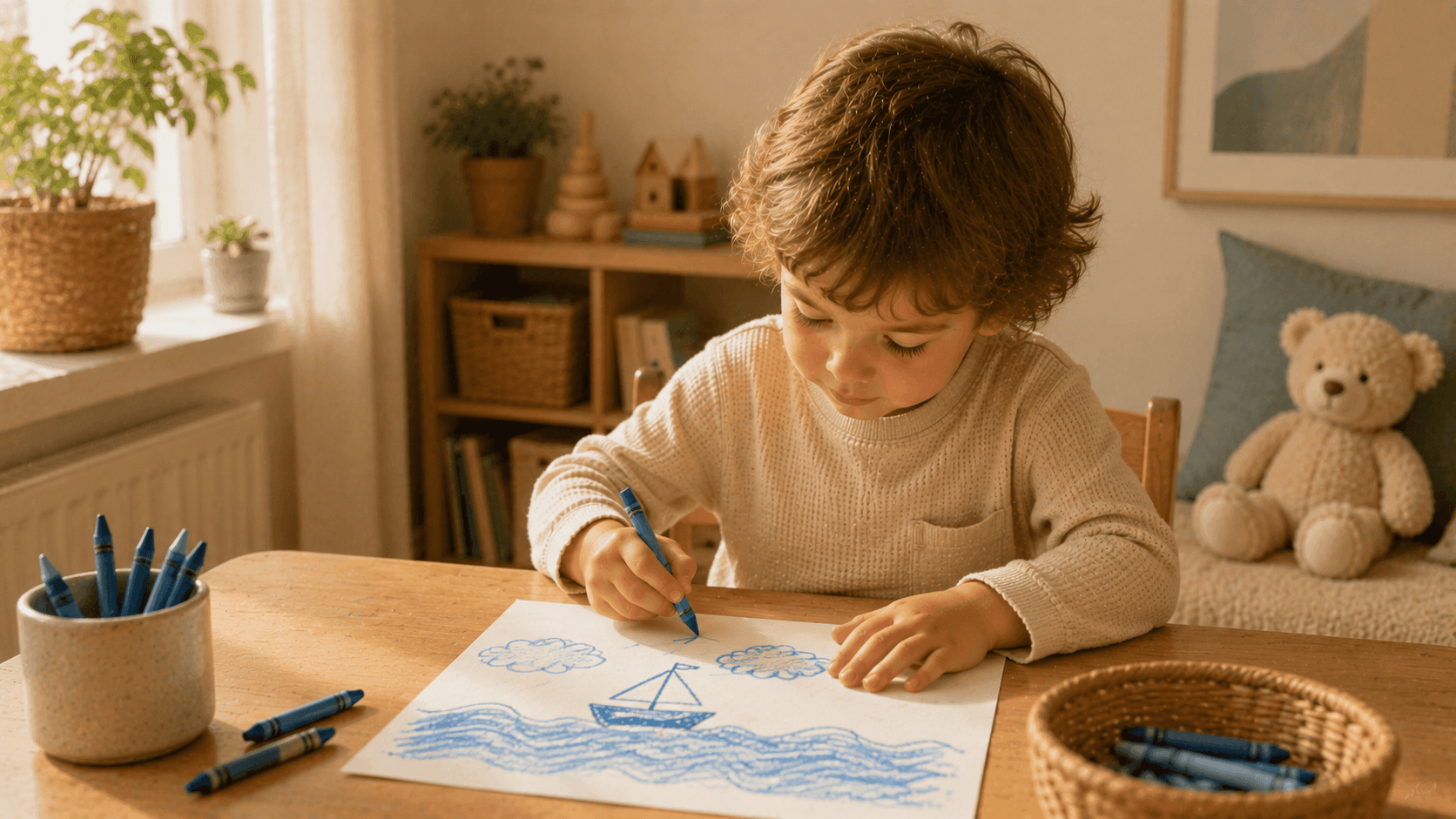
Blue appears often in children’s drawings.
It may be used for the sky, water, clothing, animals, cars, or even people. Sometimes a child chooses blue simply because it is their favorite color.
Parents may wonder whether blue has a deeper meaning.
It can be interesting to notice, but it should not be treated as a fixed message.
Blue Is Often Practical
In many drawings, blue is used because it matches something familiar.
The sky is blue. Water is blue. A favorite shirt is blue. A cartoon character may be blue.
Children often choose colors based on what they know or what they remember.
In these cases, blue may simply be practical.
Blue Can Also Be a Favorite
Some children go through strong color phases.
For a while, everything may be blue.
A blue house. A blue dog. A blue family. A blue sun.
This does not automatically mean anything emotional. It may just be the color they enjoy most.
Avoid Fixed Interpretations
You may find websites that say blue means calmness, sadness, or sensitivity.
Sometimes color can feel connected to mood, but children’s drawings are rarely that simple.
A blue drawing might be peaceful. It might also be about the ocean, a superhero, a rainy day, or a favorite marker.
Context matters.
Look at the Whole Picture
Instead of focusing only on the color, ask:
- What is being drawn?
- Is blue used every time or only in this picture?
- Did the child talk about the drawing?
- Are there other colors too?
- Is this a favorite color phase?
The answers can help you understand the drawing more gently.
What Parents Can Ask
Try simple questions:
- “Why did you choose blue?”
- “Is this water or sky?”
- “What is happening here?”
- “Do you want to tell me about this part?”
Children often explain their choices in charming and surprising ways.
Key Takeaways
- Blue is common in children’s drawings.
- It is often used for sky, water, clothing, or favorite objects.
- Blue does not have one fixed meaning.
- Context is more important than color alone.
- Asking the child gives better insight than guessing.
Blue may be calm, playful, practical, or simply beautiful to your child. The story around it matters most.