Blog

  • Green Color Meaning in Children’s Drawings

    Green Color Meaning in Children’s Drawings

    Green is a color children often use for grass, trees, plants, dinosaurs, frogs, monsters, and nature scenes.

    It can make a drawing feel lively and full of the outdoors.

    But like every color in children’s artwork, green does not have just one meaning.

    It depends on the child, the subject, and the story they are creating.

    Green Often Comes from Nature

    Many children first use green in simple nature scenes.

    They may draw:

    • Grass
    • Trees
    • Leaves
    • Flowers
    • Gardens
    • Parks

    In these cases, green is often a practical color choice. The child is using what they know about the world.

    A green tree or green field may simply mean the child is drawing an outdoor place.

    Green Can Be Playful Too

    Green is not only for nature.

    Children may use green for imaginary things:

    • Dragons
    • Aliens
    • Monsters
    • Dinosaurs
    • Magic potions
    • Superhero characters

    This is where green becomes playful.

    It helps children make something feel unusual, funny, or exciting.

    What If a Child Uses a Lot of Green?

    Using a lot of green may mean the child enjoys the color, likes nature, or is focused on a certain theme.

    It does not need to be interpreted too strongly.

    Some children go through phases where one color appears again and again. These phases are often part of normal creative exploration.

    Avoid Overthinking the Color

    Adults sometimes want colors to “mean” something clear.

    But children often choose colors for simple reasons.

    The green crayon was nearby. It was sharp. It was their favorite. It matched the picture. It looked good.

    All of these explanations are possible.

    What Parents Can Do

    If you notice a lot of green, invite your child to talk about the drawing.

    You can ask:

    • “Is this outside?”
    • “What kind of place is this?”
    • “Who lives here?”
    • “What is your favorite part?”

    These questions help your child share the story without feeling examined.

    Key Takeaways

    • Green is often used for nature scenes.
    • It can also appear in playful or imaginary drawings.
    • Lots of green may simply reflect preference or theme.
    • Color alone should not be treated as a sign.
    • The child’s story gives the best context.

    Green may be grass, a dinosaur, a forest, or a magical world. The meaning usually lives in the story your child tells.

  • Blue Color Meaning in Children’s Drawings

    Blue Color Meaning in Children’s Drawings

    Blue appears often in children’s drawings.

    It may be used for the sky, water, clothing, animals, cars, or even people. Sometimes a child chooses blue simply because it is their favorite color.

    Parents may wonder whether blue has a deeper meaning.

    It can be interesting to notice, but it should not be treated as a fixed message.

    Blue Is Often Practical

    In many drawings, blue is used because it matches something familiar.

    The sky is blue. Water is blue. A favorite shirt is blue. A cartoon character may be blue.

    Children often choose colors based on what they know or what they remember.

    In these cases, blue may simply be practical.

    Blue Can Also Be a Favorite

    Some children go through strong color phases.

    For a while, everything may be blue.

    A blue house. A blue dog. A blue family. A blue sun.

    This does not automatically mean anything emotional. It may just be the color they enjoy most.

    Avoid Fixed Interpretations

    You may find websites that say blue means calmness, sadness, or sensitivity.

    Sometimes color can feel connected to mood, but children’s drawings are rarely that simple.

    A blue drawing might be peaceful. It might also be about the ocean, a superhero, a rainy day, or a favorite marker.

    Context matters.

    Look at the Whole Picture

    Instead of focusing only on the color, ask:

    • What is being drawn?
    • Is blue used every time or only in this picture?
    • Did the child talk about the drawing?
    • Are there other colors too?
    • Is this a favorite color phase?

    The answers can help you understand the drawing more gently.

    What Parents Can Ask

    Try simple questions:

    • “Why did you choose blue?”
    • “Is this water or sky?”
    • “What is happening here?”
    • “Do you want to tell me about this part?”

    Children often explain their choices in charming and surprising ways.

    Key Takeaways

    • Blue is common in children’s drawings.
    • It is often used for sky, water, clothing, or favorite objects.
    • Blue does not have one fixed meaning.
    • Context is more important than color alone.
    • Asking the child gives better insight than guessing.

    Blue may be calm, playful, practical, or simply beautiful to your child. The story around it matters most.

  • Why Does My Child Only Use One Color?

    Why Does My Child Only Use One Color?

    Some children use every color in the box.

    Others choose one crayon and stick with it.

    If your child keeps drawing everything in blue, red, black, or green, you may wonder if the color choice means something.

    Most of the time, using one color is not a problem.

    It can be a preference, a habit, or simply the easiest choice in the moment.

    One Color Can Be a Favorite

    Children often have favorite colors.

    A child who loves blue may make blue houses, blue people, blue animals, and blue trees.

    That does not mean every object is meant to be blue in real life. It may simply mean the child enjoys using that color.

    Favorite colors can last for days, weeks, or even months.

    One Color Can Feel Easier

    Switching colors takes planning.

    A young child may not want to stop drawing, search for another crayon, or think about which color “belongs” where.

    Using one color allows them to stay focused on the story or the movement of drawing.

    For some children, the action matters more than the final picture.

    One Color Can Be a Creative Choice

    Adults often expect drawings to match reality.

    Grass should be green. The sky should be blue. The sun should be yellow.

    Children do not always think that way.

    A child may use one color because they like the look of it, because it feels bold, or because they are experimenting.

    That kind of freedom is part of creativity.

    What If the Color Is Black?

    Black often worries parents.

    But black can be popular because it is strong, clear, and easy to see on paper.

    A child may use black to outline shapes, draw characters, or make the picture stand out.

    The color alone should not be treated as a sign of anything specific.

    What Parents Can Do

    You can gently offer choices without making it a big deal.

    Try saying:

    • “Would you like any other colors?”
    • “Should we put more crayons nearby?”
    • “Tell me about this picture.”

    If your child says no, that is okay.

    The goal is not to force variety. It is to keep drawing relaxed and enjoyable.

    Key Takeaways

    • Using one color is often a normal preference.
    • Children may choose one color because it is easy or familiar.
    • Black does not automatically mean something negative.
    • Creative color choices are part of childhood drawing.
    • Offer options, but avoid pressure.

    Sometimes one color is simply the color your child loves most today.

  • Why Does My Child Draw Monsters?

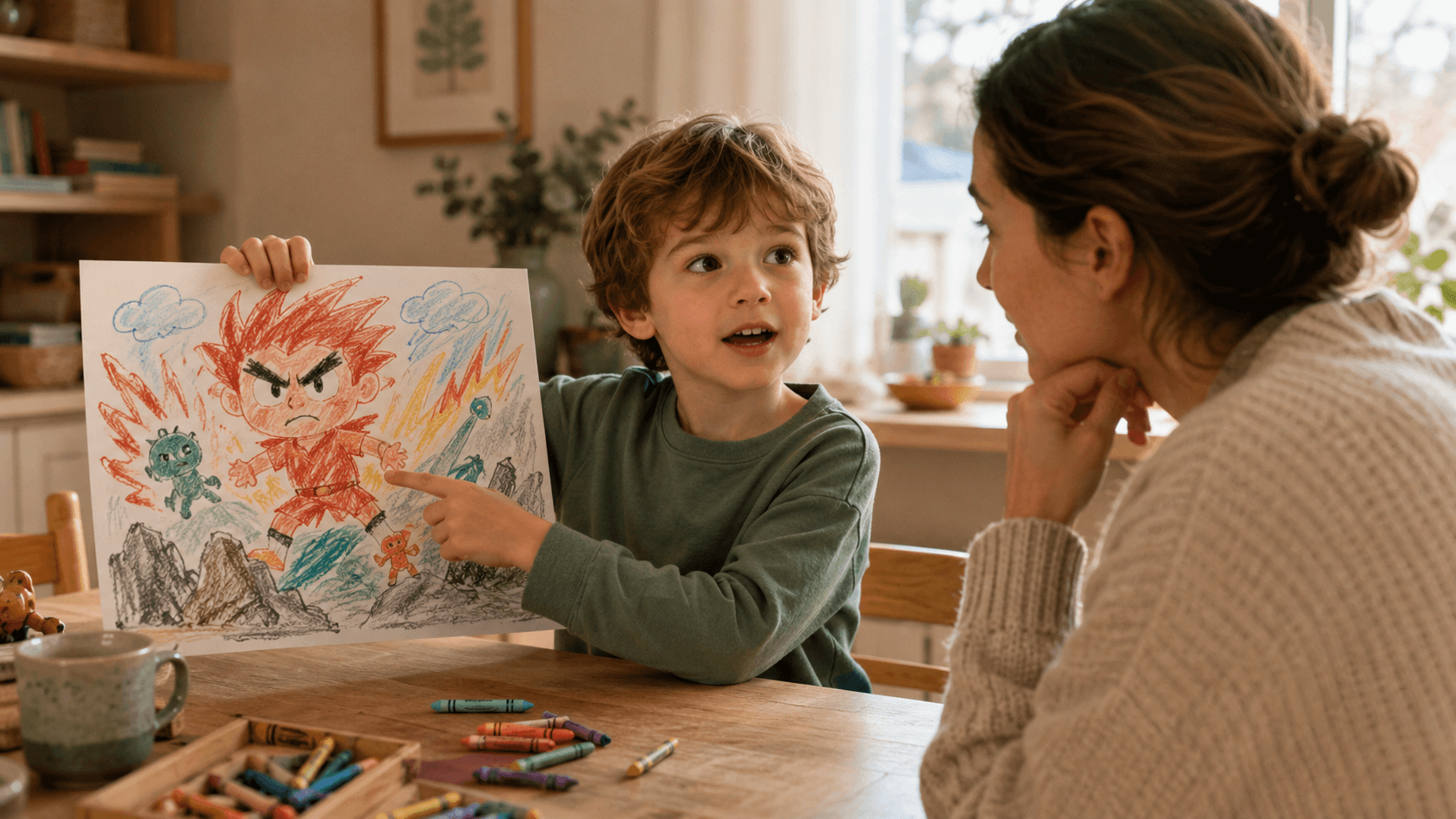
    Why Does My Child Draw Monsters?

    A monster drawing can make a parent pause.

    Sharp teeth. Big eyes. Strange arms. Dark colors. Maybe even a scary face.

    It is easy to wonder, “Should I be worried?”

    In most cases, monster drawings are a normal part of childhood imagination.

    Children often explore big, strange, funny, or slightly scary ideas through play and drawing.

    Monsters Can Be Fun

    To adults, monsters may look frightening.

    To children, they may be exciting, silly, powerful, or playful.

    Many children meet monsters in cartoons, books, games, costumes, and pretend play. Drawing one can simply be another way to enjoy that world.

    A monster may not be a sign of fear. It may be a character.

    Monsters Let Children Invent Freely

    One reason children like drawing monsters is that there are no rules.

    A monster can have five eyes, three legs, purple hair, or wings.

    It does not have to look “right.”

    That freedom can be very appealing, especially for children who worry about drawing things correctly.

    Monster drawings allow imagination to take over.

    What If the Monster Looks Scary?

    A scary-looking drawing does not always mean a child feels scared.

    Children often exaggerate features because it is fun:

    • Bigger teeth
    • Darker colors
    • Huge eyes
    • Long claws
    • Wild hair

    These details can make the drawing feel more dramatic.

    If you are curious, ask the child about it.

    You might discover the monster is friendly, lonely, funny, or part of a game.

    What Parents Can Ask

    Try open questions:

    • “What is your monster’s name?”
    • “Is it friendly or tricky?”
    • “What does it like to do?”
    • “Where does it live?”

    These questions help your child turn the drawing into a story.

    They also help you understand how the child sees the character.

    When to Pay Closer Attention

    Most monster drawings are nothing to worry about.

    It may be worth paying closer attention if frightening themes appear again and again over time and seem connected with changes in sleep, behavior, mood, or daily routines.

    Even then, the drawing is only one piece of the picture.

    Key Takeaways

    • Monster drawings are often part of normal imagination.
    • Scary-looking drawings do not automatically mean fear.
    • Monsters give children freedom to invent.
    • Asking about the story is more helpful than guessing.
    • Patterns over time matter more than one drawing.

    Sometimes a monster is not a warning sign. Sometimes it is simply your child discovering how fun imagination can be.

  • Is My Child’s Drawing Age Appropriate?

    Is My Child’s Drawing Age Appropriate?

    Many parents ask this question at some point:

    “Is my child’s drawing normal for their age?”

    It is an understandable question. When you see another child drawing detailed people, houses, or animals, it is easy to compare.

    But children develop drawing skills at different speeds.

    Some children love drawing and practice every day. Others would rather build, run, talk, sing, or play outside.

    Drawing is only one part of development.

    What “Age Appropriate” Really Means

    Age-appropriate does not mean every child should draw the same way at the same age.

    It simply means there are common patterns many children move through.

    For example:

    • Younger children often scribble and make simple marks
    • Preschoolers may begin drawing circles, people, and basic shapes
    • Older children often add more details and stories

    These are general patterns, not strict rules.

    Why Children Draw Differently

    A child’s drawing may be influenced by many things:

    • Fine motor skills
    • Interest in drawing
    • Time spent practicing
    • Confidence
    • Exposure to books, art, and play
    • Mood and attention that day

    Two children of the same age may draw very differently and still both be developing in healthy ways.

    Try Not to Compare Too Much

    Comparison can make drawing feel stressful for both parent and child.

    One child may draw a detailed family scene at age five. Another may still prefer simple shapes and lines.

    That does not automatically mean one child is “ahead” and the other is “behind.”

    It may simply mean they have different interests, practice habits, or styles.

    What Parents Can Look For

    Instead of asking whether a drawing is “good enough,” look for gentle signs of growth.

    Over time, does your child:

    • Try new shapes?
    • Add new details?
    • Tell stories about drawings?
    • Show interest in creating?
    • Gain more control with crayons or pencils?

    Small changes can be meaningful.

    What Parents Can Do

    Give your child relaxed opportunities to draw.

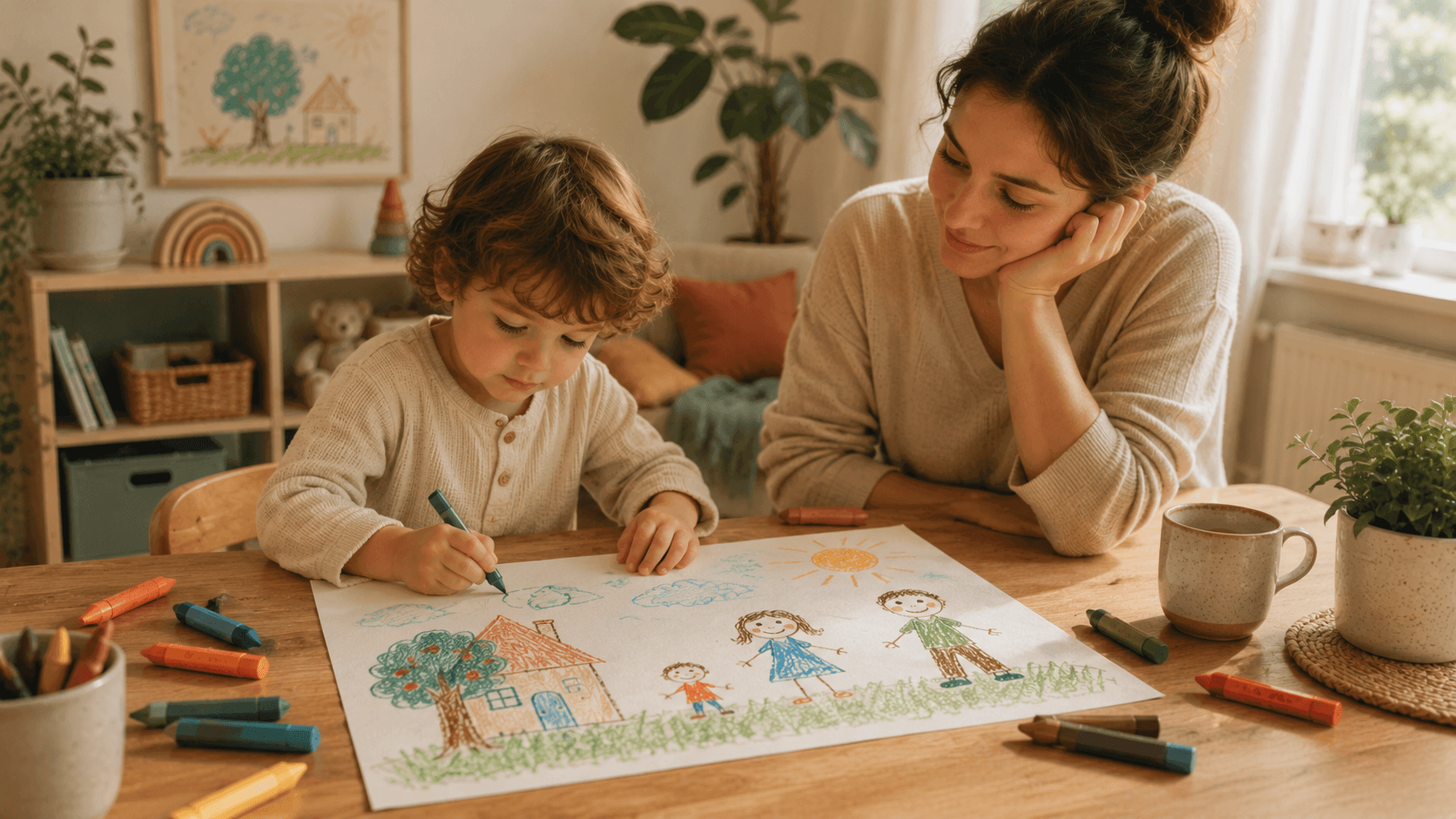
    You can keep supplies easy to reach, draw together, and ask about their pictures without correcting every detail.

    Try saying:

    • “Tell me about this.”
    • “What did you enjoy drawing?”
    • “I noticed you added something new here.”

    This keeps drawing positive.

    When to Ask for Support

    If you are concerned about your child’s development more broadly, it is always okay to ask a pediatrician, teacher, or child development professional.

    But a simple or messy drawing by itself is usually not enough reason to worry.

    Look at the whole child, not just one picture.

    Key Takeaways

    • Children develop drawing skills at different speeds.
    • Age-appropriate drawing is a range, not a fixed checklist.
    • Interest and practice make a big difference.
    • Growth over time matters more than comparison.
    • Drawing should feel encouraging, not pressured.

    Your child’s drawings do not need to match anyone else’s. They are part of their own way of learning, playing, and telling stories.

  • Drawing Development at Age 3: What Parents May Notice

    Drawing Development at Age 3: What Parents May Notice

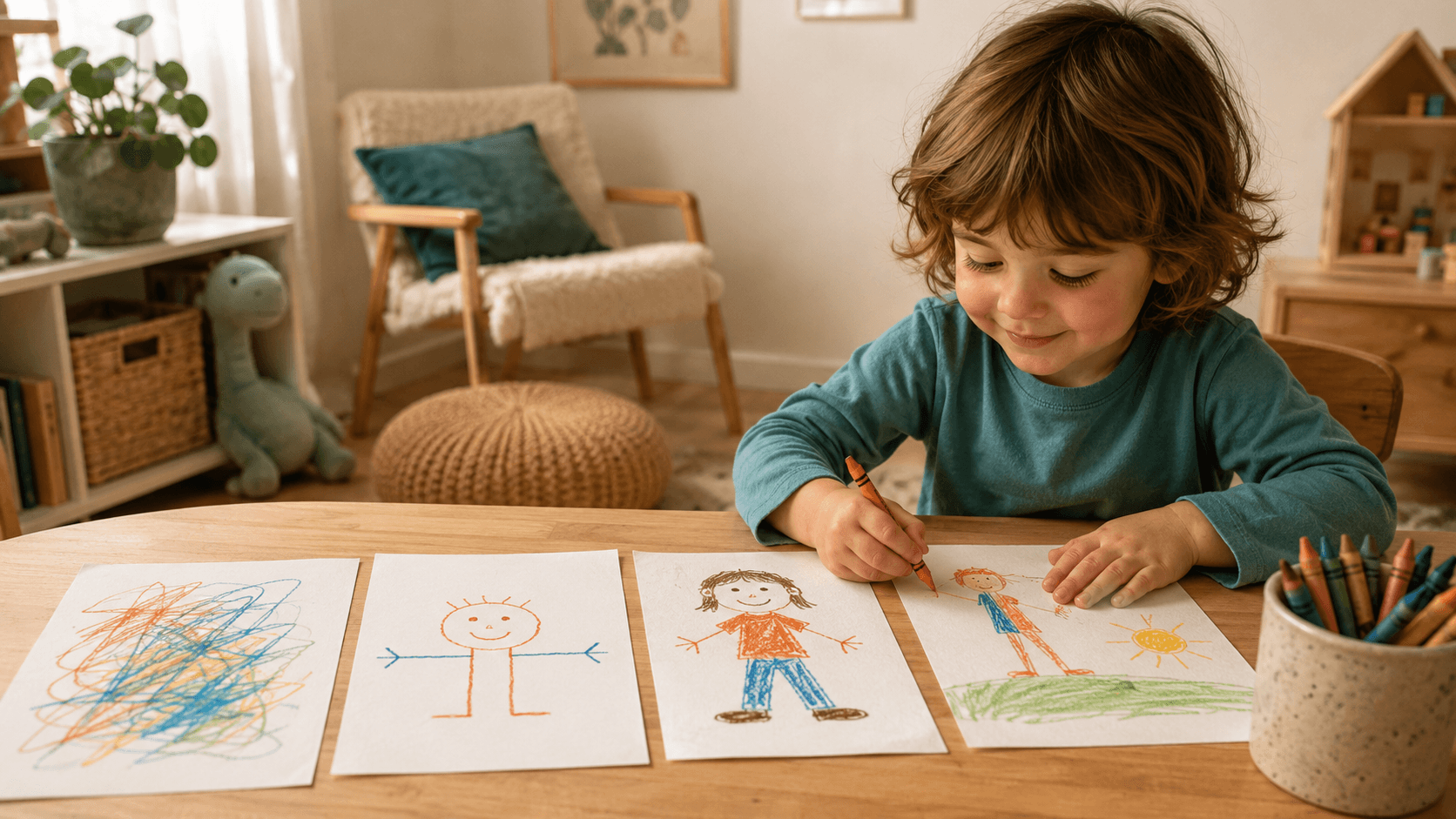
    Age three is a wonderfully messy drawing stage.

    Your child may fill pages with circles, lines, dots, and shapes that seem to move in every direction. One day the drawing is “a cat.” The next day a very similar drawing is “Grandma’s house.”

    That is completely normal.

    At this age, drawing is often less about making something look real and more about exploring movement, imagination, and control.

    What Drawing Looks Like at Age 3

    Many three-year-olds are still learning how to control a crayon or marker.

    You may see:

    • Circles and loops
    • Lines going across the page
    • Dots and marks
    • Early attempts at faces
    • Scribbles with a story attached

    The drawing may not look like much to an adult, but the child may have a whole story in mind.

    That story matters.

    Naming the Drawing Is a Big Step

    Around this age, children often begin naming what they draw.

    They may say:

    “This is Daddy.” “This is a dog.” “This is my room.” “This is a monster.”

    Even if the picture does not look like the object, the act of naming it shows imagination and symbolic thinking.

    The child is beginning to connect marks on paper with ideas.

    Do Three-Year-Olds Draw People?

    Some do, some do not.

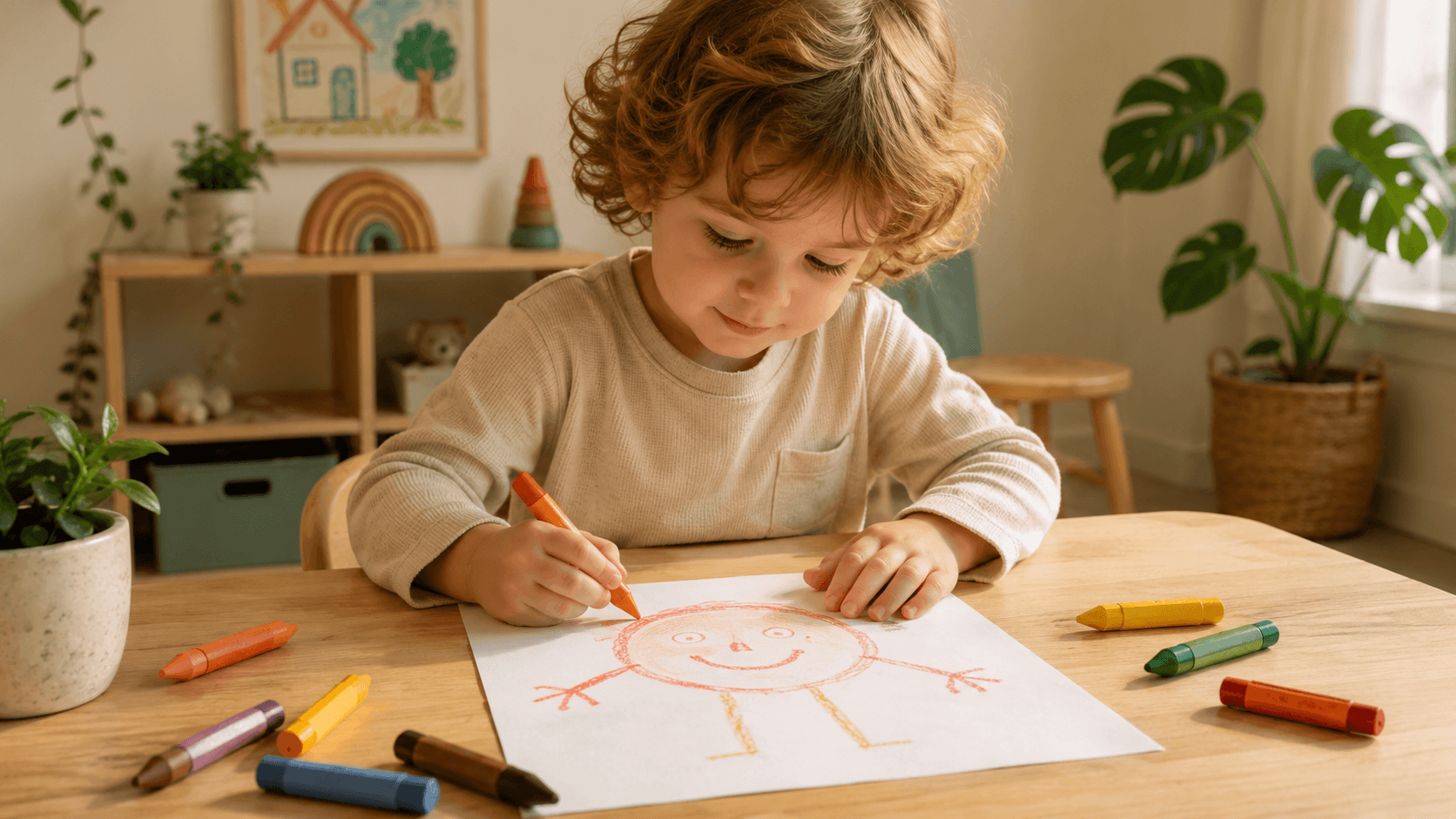
    Early people drawings may look like a circle with lines coming out of it. Sometimes the head and body are the same shape. Hands, feet, hair, and clothing may be missing.

    That does not mean something is wrong.

    At age three, children are still figuring out how to represent the body.

    What Parents Can Do

    The best support is simple.

    Offer paper. Offer crayons. Let the child explore.

    Try not to correct the drawing. Instead of saying, “That doesn’t look like a dog,” ask:

    “Can you tell me about your dog?”

    This encourages language, confidence, and imagination.

    When to Keep Watching

    Children develop at different speeds. Some love drawing at age three. Others prefer blocks, movement, pretend play, or outdoor activities.

    If you have concerns about your child’s development overall, drawings can be one small thing to mention to a professional. But on their own, simple drawings at age three are usually part of normal early development.

    Key Takeaways

    • Age three drawings are often scribbly and imaginative.
    • Naming a drawing is an important step.
    • Early people drawings may be very simple.
    • The story behind the drawing can matter more than how it looks.
    • Encouragement is more helpful than correction.

    At three, drawing is not about perfection. It is about discovering that a crayon can turn thoughts into marks on a page.

  • Sun Drawing Meaning in Children’s Drawings

    Sun Drawing Meaning in Children’s Drawings

    Many children love drawing the sun.

    It may sit in the corner of the page with long yellow rays. It may have a smiling face. It may be huge, tiny, bright, or half-hidden behind clouds.

    Because the sun feels so cheerful, parents often wonder if it says something about a child’s mood.

    Sometimes it might. But often, it is simply a familiar part of how children build a scene.

    Why Children Draw the Sun

    The sun is one of the first nature symbols many children learn to draw.

    It is simple. It is recognizable. It helps fill the sky.

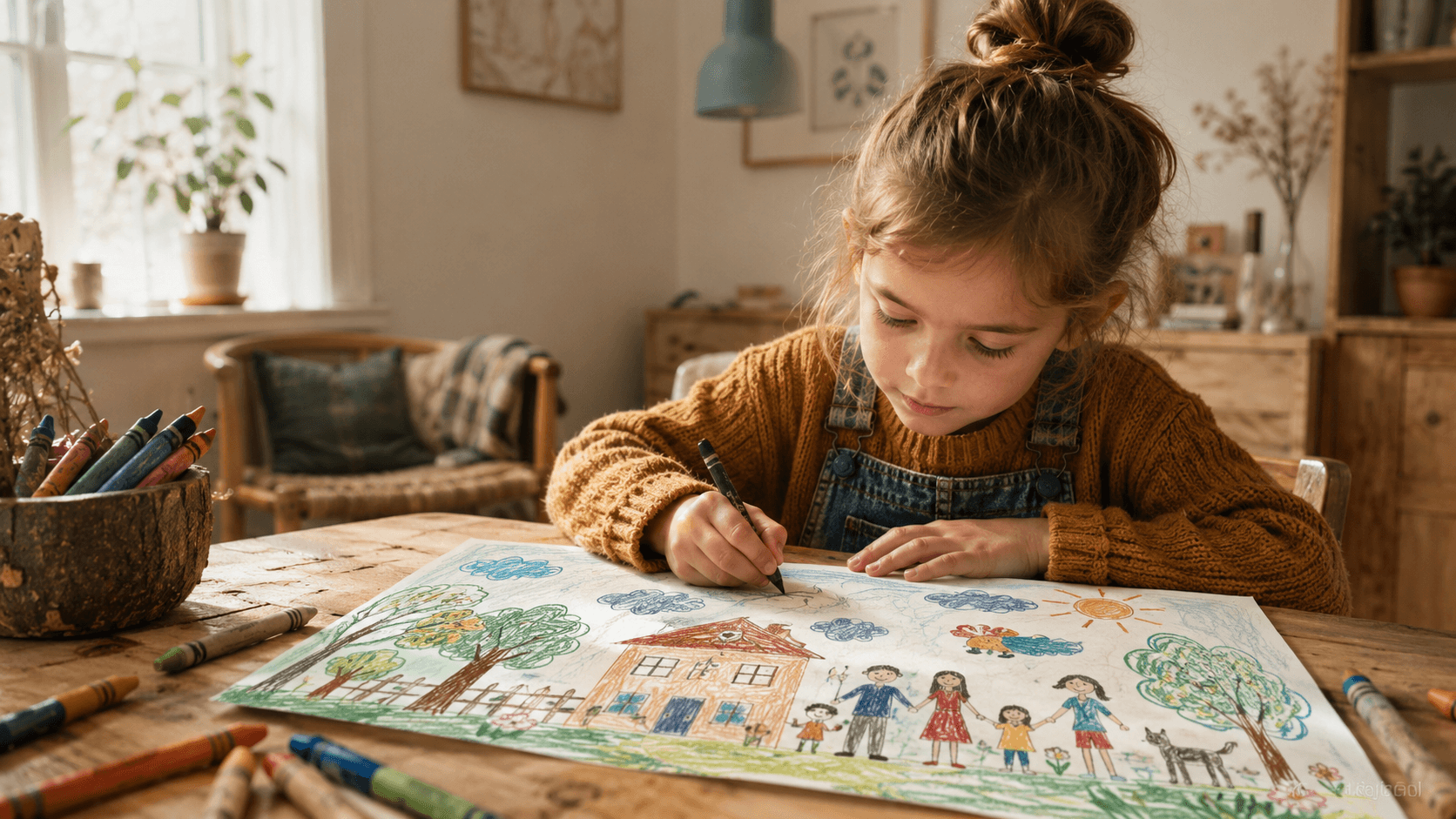
    For young children, adding a sun can make a picture feel complete. A house, a tree, and a sun in the corner is a classic childhood drawing combination.

    The sun may not be the “meaning” of the picture. It may just be part of the world the child is creating.

    A Smiling Sun

    Children often give the sun a face.

    This can feel sweet and expressive, but it does not always need a deep interpretation.

    Young children commonly give human features to objects. A smiling sun, talking cloud, or happy flower may simply show imagination and playful thinking.

    It can also come from picture books, cartoons, stickers, or classroom activities.

    A Very Big Sun

    A large sun may catch a parent’s eye.

    But size in children’s drawings is not always about emotional importance. Sometimes children draw large objects because they are fun, easy, or central to the scene.

    A big sun may mean:

    • The child wanted a bright picture
    • They enjoyed drawing rays
    • They started with the sun first
    • They wanted to fill the sky

    It is worth noticing, but not overreading.

    What If There Is No Sun?

    Some parents wonder if a drawing without a sun is less positive.

    Not necessarily.

    Children leave things out all the time. They may be focused on people, animals, buildings, or action instead.

    A missing sun does not automatically mean anything.

    It may simply mean the child was thinking about something else.

    What Parents Can Ask

    If you are curious, try questions that invite the child’s story.

    • “What is the weather like here?”
    • “Is it morning or afternoon?”
    • “Why did you give the sun a face?”
    • “What is happening under the sun?”

    These questions feel natural and playful.

    They also give your child room to explain the drawing in their own words.

    Key Takeaways

    • The sun is a common symbol in children’s drawings.
    • It often helps children create a complete outdoor scene.
    • A smiling sun may reflect imagination, not a hidden message.
    • Size and placement should not be interpreted alone.
    • Asking about the story is more helpful than guessing.

    Sometimes a sun is just sunshine. And sometimes, the story your child tells about it is the most interesting part.

  • Why Drawing Patterns Matter More Than One Picture

    Why Drawing Patterns Matter More Than One Picture

    One drawing can make a parent pause.

    Maybe your child draws the same house every week. Maybe people suddenly look smaller. Maybe darker colors appear more often than before.

    It is tempting to look at one picture and ask, “What does this mean?”

    But with children’s drawings, one picture is usually only a small piece of the story.

    Patterns matter more.

    One Drawing Is a Moment

    A child’s drawing can be influenced by many simple things.

    They may be tired. They may be copying something they saw. They may be trying a new idea. They may have chosen a color because it was nearby.

    That does not make the drawing meaningless. It just means we should be careful about giving it too much weight.

    A single drawing is like one page from a diary. It can be interesting, but it does not explain the whole book.

    Patterns Show What Repeats

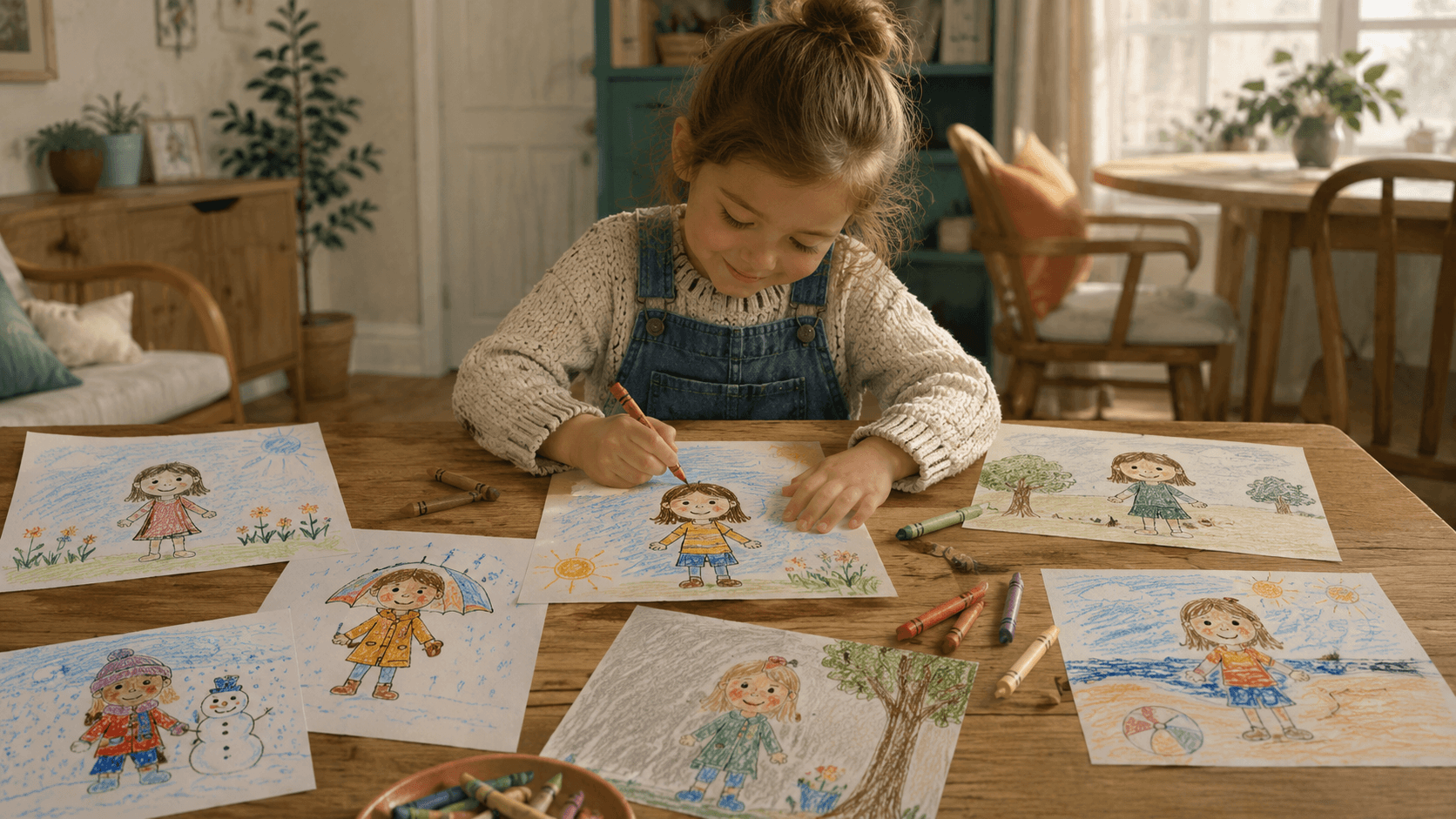
    When you save drawings over time, you may begin to notice patterns.

    For example:

    • Favorite subjects
    • Repeated characters
    • More detailed people
    • New stories appearing
    • Changes in color choices
    • More confidence with shapes and space

    These patterns can help you understand your child’s interests and development in a calmer way.

    Instead of asking, “Why did they draw this today?” you can ask, “What keeps showing up over time?”

    Repetition Is Often Normal

    Many children repeat the same drawing subjects.

    Some draw animals again and again. Some draw houses. Some draw monsters, hearts, rainbows, or family scenes.

    Repetition is often how children practice.

    They learn where to place lines, how to build a shape, and how to add more details. The drawing may look similar to an adult, but the child may be improving something small each time.

    Change Can Be Interesting Too

    Patterns are not only about repetition.

    Changes can be worth noticing as well.

    Maybe a child starts adding people where they used to draw only objects. Maybe their drawings begin to include more stories. Maybe they add backgrounds, weather, or emotions.

    These changes may simply reflect growth.

    As children get older, their drawings often become more detailed and more connected to stories.

    What Parents Can Do

    You do not need a complicated system.

    Try this:

    • Keep a folder for drawings
    • Take photos of artwork before it gets recycled
    • Write the date on the back
    • Ask your child to describe the picture
    • Look back every month or two

    This creates a gentle record of creative development.

    It also helps you avoid overreacting to one drawing.

    A Simple Question to Ask

    When looking across several drawings, ask:

    “What seems to matter to my child right now?”

    This question keeps the focus on curiosity.

    It might reveal an interest in animals, school, family, superheroes, nature, or pretend play.

    Sometimes that is the most meaningful insight of all.

    Key Takeaways

    • One drawing is only a moment.
    • Patterns over time are usually more helpful.
    • Repeated subjects are often part of learning.
    • Changes in detail and storytelling can show growth.
    • Saving drawings helps parents observe calmly.

    Children’s drawings do not need to be decoded like a puzzle. Sometimes, they are best understood as a growing collection of small stories.

  • Common Drawing Interpretation Mistakes Parents Should Avoid

    Common Drawing Interpretation Mistakes Parents Should Avoid

    If your child hands you a drawing, it is natural to look for meaning.

    Maybe the sky is dark. Maybe one person is missing. Maybe the house is tiny and the sun is huge.

    Before long, your mind starts filling in the blanks.

    “Does this mean something?” “Should I be worried?” “Am I missing a sign?”

    That reaction is very human. Parents want to understand their children. But when it comes to drawings, it is easy to read too much into one picture.

    Here are a few common mistakes to avoid.

    Mistake 1: Treating One Drawing Like the Whole Story

    One drawing is just one moment.

    A child may draw something because they saw it in a book, talked about it at school, or simply liked the color of a crayon that day.

    A single picture can be interesting, but it usually is not enough to explain how a child feels or what they are going through.

    It is more helpful to notice patterns over time.

    Do the same themes appear again and again? Are drawings becoming more detailed? Has the child’s interest changed recently?

    Those questions are usually more useful than trying to decode one picture.

    Mistake 2: Assuming Every Color Has a Fixed Meaning

    Many parents search online for color meanings.

    Red means anger. Black means sadness. Blue means calm.

    The problem is that children do not always use color that way.

    Sometimes red is just the sharpest crayon. Sometimes black is chosen because it stands out. Sometimes blue is used because the child is drawing water, sky, or a favorite character.

    Color can be worth noticing, but it should not be treated like a simple code.

    Mistake 3: Forgetting the Child’s Age

    A four-year-old drawing a person with no hands is very different from a much older child doing the same thing.

    Young children are still learning how to control lines, plan space, and remember details.

    What looks “missing” to an adult may simply be part of normal drawing development.

    Before worrying about a detail, it helps to ask: is this typical for the child’s age?

    Mistake 4: Not Asking the Child

    Adults often guess.

    Children often explain.

    A simple question like “Can you tell me about your picture?” can change everything.

    You may think a drawing looks serious, but your child may say it is a superhero house, a birthday party, or a scene from a cartoon.

    Letting the child explain the drawing is usually better than interpreting it from the outside.

    Mistake 5: Looking for Problems First

    Drawings can be a wonderful way to connect with a child.

    But if every picture becomes something to analyze, the child may start feeling watched instead of encouraged.

    Try to begin with curiosity, not concern.

    You can say:

    • “I love how much detail you added here.”
    • “Tell me what’s happening.”
    • “What did you enjoy drawing most?”

    This keeps the focus on creativity and connection.

    What Parents Can Do Instead

    If you are curious about your child’s drawings, try saving them for a few weeks or months.

    Look at them as a collection.

    Notice the subjects, details, colors, and stories that repeat. Ask gentle questions. Let your child lead the explanation.

    The goal is not to become an expert interpreter.

    The goal is to stay interested in how your child sees the world.

    Key Takeaways

    • One drawing rarely tells the whole story.
    • Colors and symbols do not have fixed meanings.
    • Age matters when looking at drawing details.
    • Asking the child is often better than guessing.
    • Drawings are best understood with curiosity, not pressure.

    Children’s drawings can open small windows into their imagination. The best way to look through those windows is gently.

  • How to Interpret Children’s Drawings Without Overthinking

    How to Interpret Children’s Drawings Without Overthinking

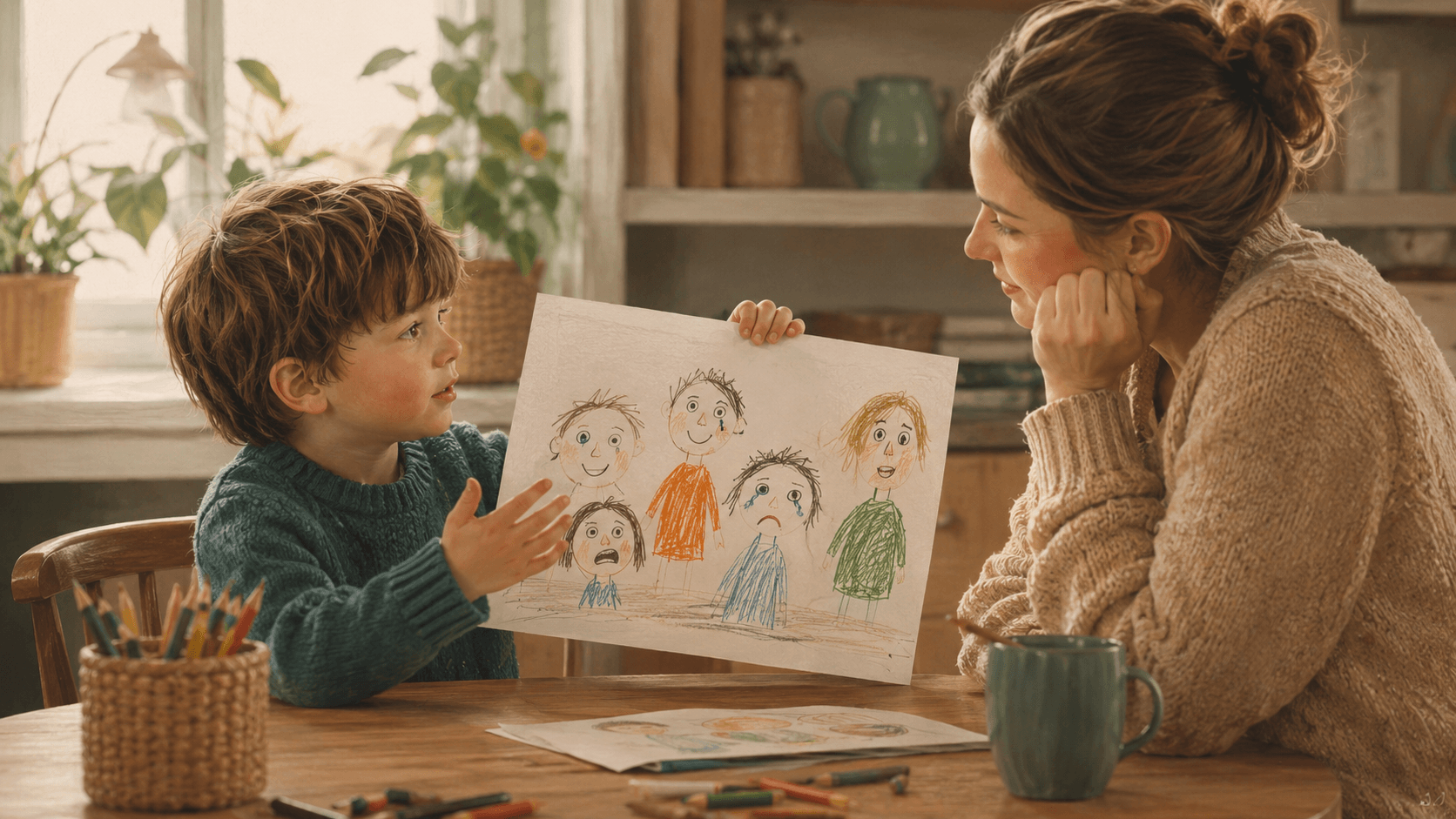
    Children’s drawings can make parents curious.

    A tiny person, a huge house, a dark sky, a repeated animal, or a family picture can all raise questions. It is natural to wonder what these drawings mean.

    But the most helpful approach is usually not to interpret too quickly.

    Children’s drawings are not puzzles that parents need to solve. They are creative expressions, stories, experiments, and sometimes just play.

    A gentle way to interpret a drawing is to start with observation.

    Step 1: Look at the whole picture

    Before focusing on one detail, notice the full drawing. What is happening? Who is included? Is there a setting? Does the picture seem like a story?

    One object rarely explains the whole drawing.

    Step 2: Consider the child’s age

    A 4-year-old and a 7-year-old may draw the same subject very differently. Younger children may use simple shapes. Older children may add details, scenes, and more storytelling.

    Age matters because drawing skills grow over time.

    Step 3: Ask the child

    This is the most important step.

    Instead of guessing, ask:

    • “Can you tell me about this?”
    • “What is happening here?”
    • “Who is this?”
    • “What happens next?”
    • “What did you like drawing most?”

    Children often give simple, surprising, or funny answers. Their explanation matters more than an adult’s assumption.

    Step 4: Look for patterns

    One drawing is just one moment. Patterns over time can be more useful.

    You may notice:

    • Favorite subjects
    • New details
    • Repeated stories
    • Growing confidence
    • Changes in color or theme

    Saving drawings can help you see development more clearly.

    Step 5: Avoid fixed meanings

    Be careful with statements like “This always means…” or “That proves…”

    A small person does not always mean insecurity. A dark color does not always mean sadness. A missing family member does not always mean something is wrong.

    Children draw for many reasons, and context matters.

    What parents can do:

    • Stay curious
    • Ask open questions
    • Avoid dramatic reactions
    • Praise effort and storytelling
    • Keep drawings over time
    • Let creativity stay playful

    When should you pay closer attention? It may be worth observing more carefully if drawings change suddenly and those changes appear together with changes in behavior, mood, sleep, communication, or daily routines.

    Even then, drawings are only one piece of the bigger picture.

    Key takeaways:

    • Start with observation, not interpretation.
    • The child’s explanation is very important.
    • Age and context matter.
    • Patterns over time are more helpful than one drawing.
    • Avoid turning every picture into a concern.

    The best way to understand children’s drawings is to stay close, stay curious, and let the child tell the story first.