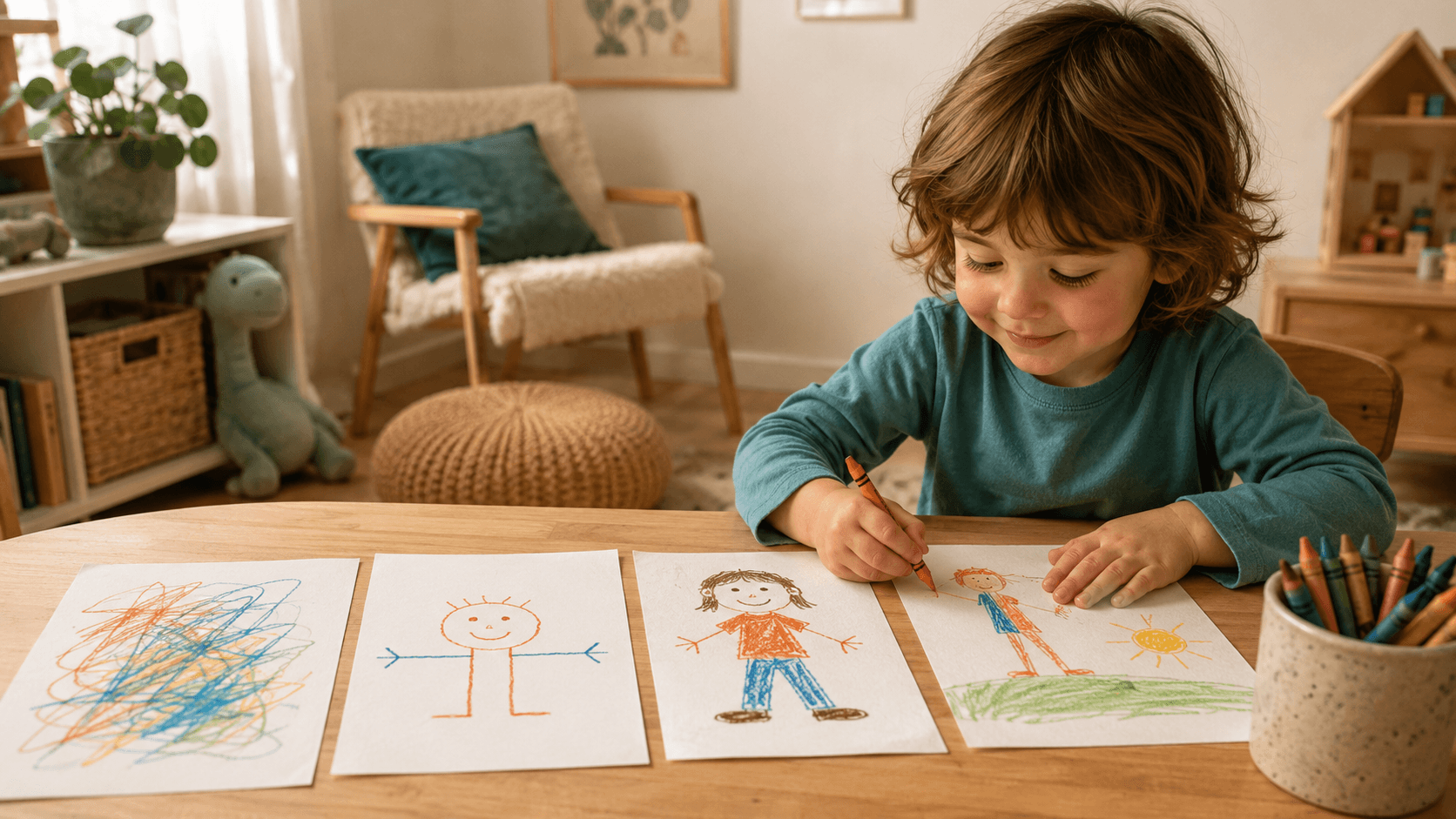
The first recognizable person a child draws can feel like a milestone.
Before that moment, pages may be filled with scribbles, circles, lines, and shapes that adults cannot easily identify.
There Is No Exact Age
Children develop drawing skills at different rates.
Many begin creating simple person-like figures during the preschool years, but the timing and appearance vary.
Early figures may be a circle with facial features and lines for arms and legs.
Recognition Comes Gradually
A child may first announce that a scribble is a person.
Later, the picture may include a head, eyes, mouth, legs, arms, and eventually a body and more details.
The child’s intention matters even when adults do not immediately recognize the result.
Practice Changes Drawings
Access to materials, interest in drawing, fine-motor development, and opportunities to observe people can all affect how drawings change.
You can compare this process with drawing development at age four and drawing development at age five.
Avoid Turning Drawing Into a Test
Asking a child to draw a person can be a fun activity.
Repeatedly correcting proportions or demanding missing details can make drawing less enjoyable.
What Parents Can Do
- Provide easy access to crayons and paper.
- Let children name their own drawings.
- Draw together without requiring imitation.
- Save pictures to see gradual changes.
- Focus on communication and creativity.
Key Takeaways
- Recognizable people often emerge during the preschool years.
- Early figures can be extremely simple.
- Development varies from child to child.
- The child’s intention is worth listening to.
Frequently Asked Questions
Is a circle with legs a normal person drawing?
Yes. Simple head-and-leg figures are a familiar part of early drawing development.
What if my preschooler only scribbles?
There is wide variation in interest and development. If you have broader concerns about development or motor skills, discuss them with a qualified professional who can consider the whole child.
Should I show my child how to draw a person?
You can enjoy drawing together, but children also benefit from experimenting and developing their own ways of representing people.