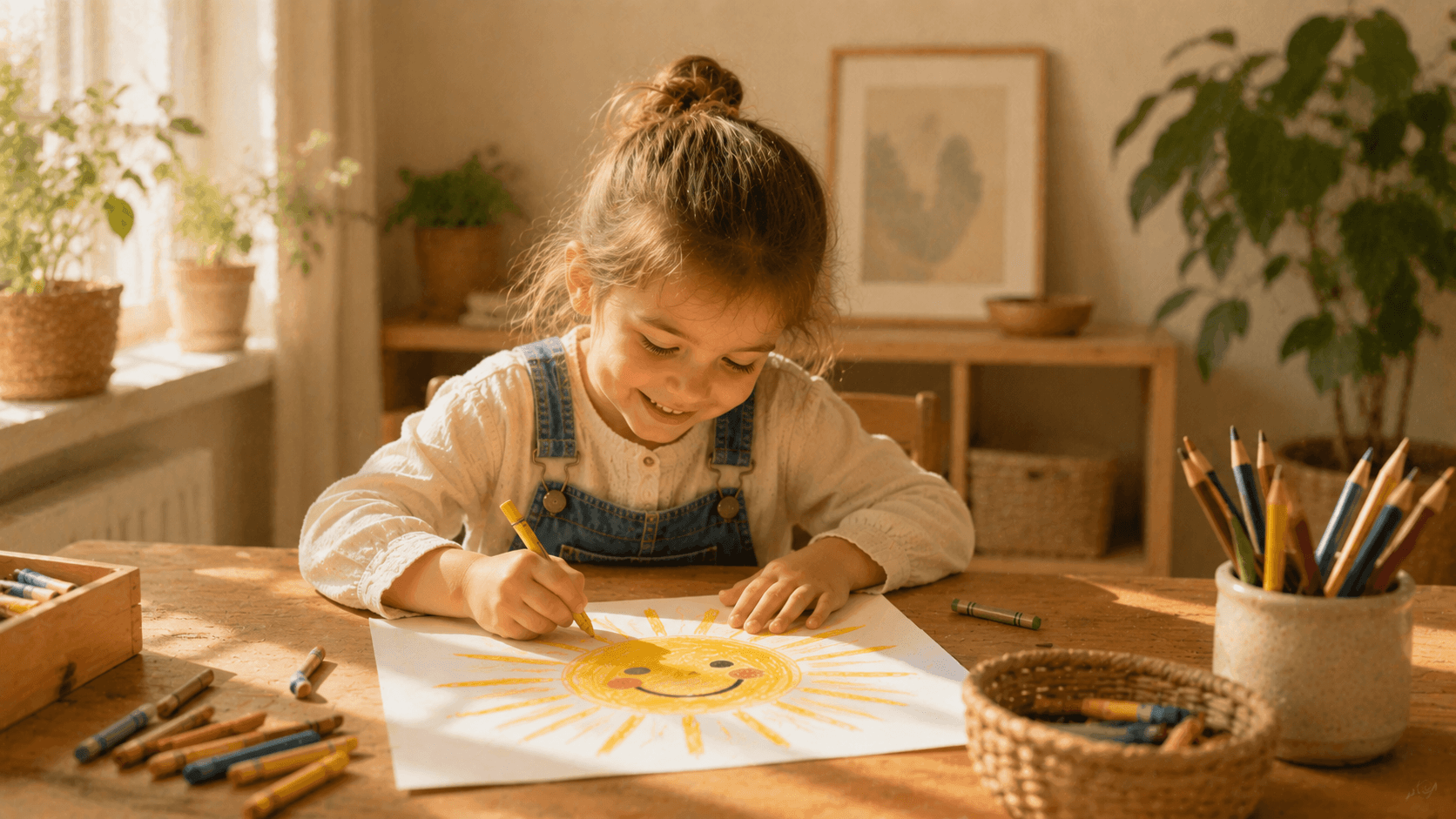
Many children love drawing the sun.
It may sit in the corner of the page with long yellow rays. It may have a smiling face. It may be huge, tiny, bright, or half-hidden behind clouds.
Because the sun feels so cheerful, parents often wonder if it says something about a child’s mood.
Sometimes it might. But often, it is simply a familiar part of how children build a scene.
Why Children Draw the Sun
The sun is one of the first nature symbols many children learn to draw.
It is simple. It is recognizable. It helps fill the sky.
For young children, adding a sun can make a picture feel complete. A house, a tree, and a sun in the corner is a classic childhood drawing combination.
The sun may not be the “meaning” of the picture. It may just be part of the world the child is creating.
A Smiling Sun
Children often give the sun a face.
This can feel sweet and expressive, but it does not always need a deep interpretation.
Young children commonly give human features to objects. A smiling sun, talking cloud, or happy flower may simply show imagination and playful thinking.
It can also come from picture books, cartoons, stickers, or classroom activities.
A Very Big Sun
A large sun may catch a parent’s eye.
But size in children’s drawings is not always about emotional importance. Sometimes children draw large objects because they are fun, easy, or central to the scene.
A big sun may mean:
- The child wanted a bright picture
- They enjoyed drawing rays
- They started with the sun first
- They wanted to fill the sky
It is worth noticing, but not overreading.
What If There Is No Sun?
Some parents wonder if a drawing without a sun is less positive.
Not necessarily.
Children leave things out all the time. They may be focused on people, animals, buildings, or action instead.
A missing sun does not automatically mean anything.
It may simply mean the child was thinking about something else.
What Parents Can Ask
If you are curious, try questions that invite the child’s story.
- “What is the weather like here?”
- “Is it morning or afternoon?”
- “Why did you give the sun a face?”
- “What is happening under the sun?”
These questions feel natural and playful.
They also give your child room to explain the drawing in their own words.
Key Takeaways
- The sun is a common symbol in children’s drawings.
- It often helps children create a complete outdoor scene.
- A smiling sun may reflect imagination, not a hidden message.
- Size and placement should not be interpreted alone.
- Asking about the story is more helpful than guessing.
Sometimes a sun is just sunshine. And sometimes, the story your child tells about it is the most interesting part.