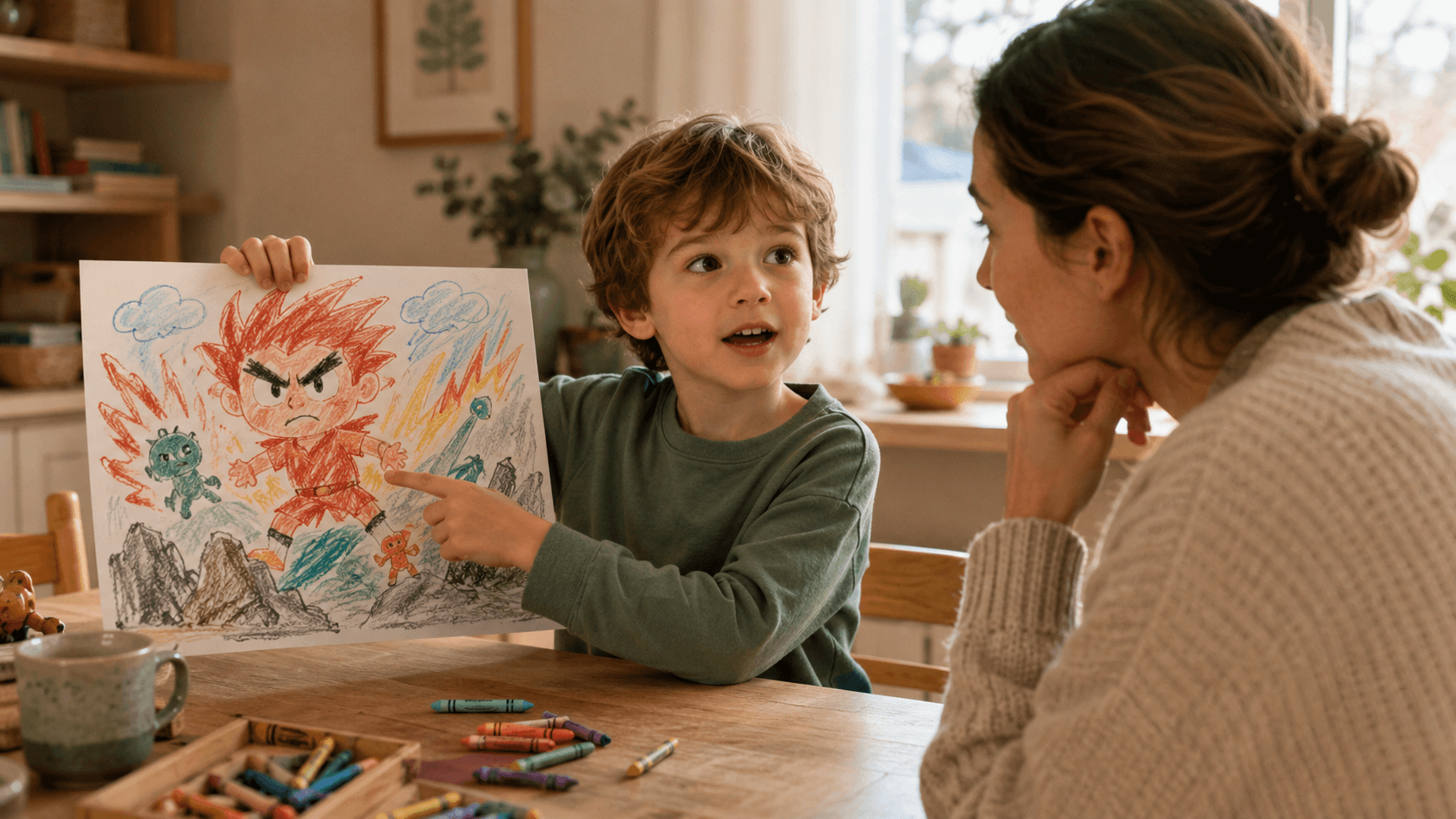
Explosions, angry faces, battles, roaring monsters, and characters shouting at each other can look intense on paper.
Parents may wonder whether angry drawings mean a child is struggling with anger.
Sometimes drawings can be a place to explore strong feelings, but the picture alone cannot answer that question.
Strong Themes Are Common in Children’s Stories
Children often enjoy action, conflict, heroes, villains, disasters, and dramatic endings.
These themes appear in pretend play, books, games, and drawings.
An angry-looking picture may simply be an exciting story.
Drawing Can Also Be a Way to Express a Moment
A child who had a frustrating day may draw an angry character.
That does not mean every angry picture should be treated as a warning sign.
Feelings change, stories change, and children experiment with expressions.
Ask About the Action
Try “What is happening here?”, “Why is this character angry?”, or “What happens next?”
Avoid beginning with “Are you angry?” or “Who made you feel this way?” because those questions introduce assumptions.
Look Beyond the Page
As with other emotional themes in children’s drawings, context matters.
Notice the child’s behavior, relationships, daily experiences, and explanations.
If you have persistent concerns about aggression, distress, or wellbeing, seek advice from a qualified professional who can consider the whole child.
What Parents Can Do
- React calmly to intense pictures.
- Invite the child to tell the story.
- Avoid banning ordinary dramatic themes.
- Notice repeated changes alongside real-life behavior.
- Seek professional guidance for broader ongoing concerns.
Key Takeaways
- Angry pictures can be part of ordinary storytelling and play.
- A drawing may sometimes reflect a momentary feeling.
- One picture cannot establish a child’s emotional state.
- The child’s explanation and broader context matter most.
Frequently Asked Questions
Do violent or angry drawings mean a child is aggressive?
Not by themselves. Dramatic themes can come from imagination, media, play, stories, or temporary feelings.
Should parents stop children from drawing angry pictures?
Ordinary creative expression does not usually need to be banned. Calm conversation and appropriate boundaries around real-world behavior are more useful.
What if the drawings change suddenly and my child also seems distressed?
Pay attention to the broader change and consider discussing your concerns with a qualified professional who can evaluate the full context.