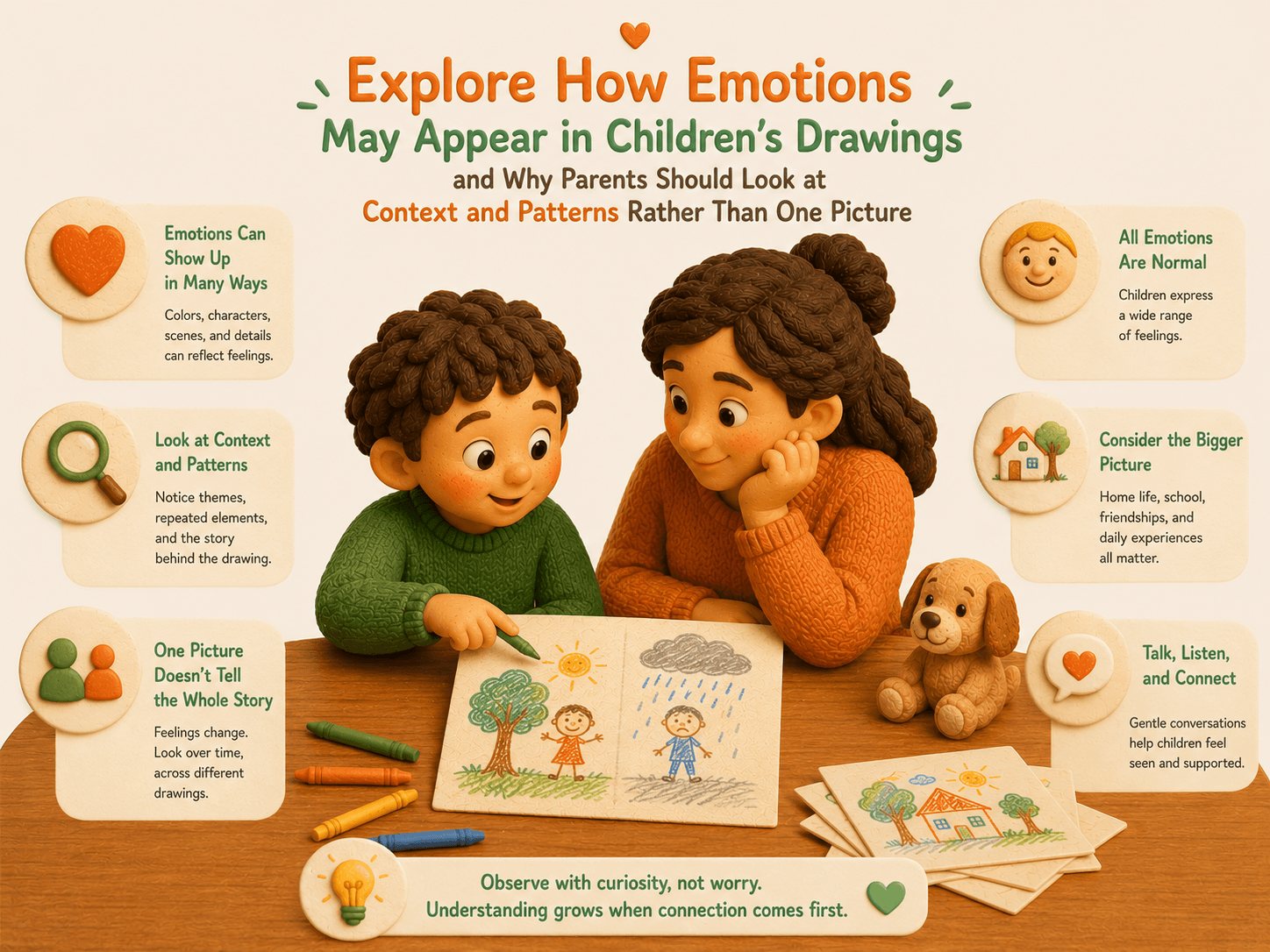
Children’s drawings can feel emotional.
A bright sun, a smiling family, a dark sky, or a tiny person in the corner of the page can make parents wonder what their child is feeling.
It is natural to ask: “Can drawings reveal emotions?”
The honest answer is: sometimes they may offer clues, but they do not give clear answers on their own.
Children draw for many reasons. A dark color may be chosen because it was the nearest crayon. A sad face may be part of a story. A monster may be something fun, not frightening. A messy picture may simply mean the child was drawing quickly.
This is why it is important not to treat one drawing as proof of how a child feels.
Drawings may reflect:
- Mood in the moment
- Imagination
- Favorite stories or characters
- Experiences from the day
- Creative experiments
- Growing drawing skills
They may also reflect emotions sometimes, but context matters.
Instead of asking “What emotion does this drawing show?”, try asking “What is happening in this picture?”
Children often explain things in surprising ways. A dark cloud might be part of a rainstorm story. A crying face might be a character who lost a toy. A monster might be the hero of the picture.
Good questions to ask:
- “Can you tell me about this?”
- “How does this character feel?”
- “What happened here?”
- “What happens next?”
- “What do you like most about this drawing?”
These questions allow the child to share without feeling judged.
Parents can also look for patterns over time. One emotional-looking drawing may not mean much. But repeated themes, sudden changes, or drawings that appear alongside changes in behavior may be worth noticing.
For example, it may be helpful to pay attention if:
- A child suddenly stops enjoying drawing
- Many drawings change strongly over time
- A child seems upset while explaining them
- Drawing themes appear alongside mood or behavior changes
Even then, drawings should be considered one part of the overall picture, not a standalone answer.
What parents can do:
- Stay calm and curious
- Avoid dramatic reactions
- Ask open questions
- Save drawings over time
- Notice behavior outside the drawing too
The goal is not to analyze every detail. The goal is to create space where children feel comfortable sharing.
Key takeaways:
- Drawings can sometimes offer emotional clues.
- One drawing cannot explain a child’s feelings.
- Context and the child’s own story matter most.
- Patterns over time are more useful than single pictures.
- Calm curiosity is better than quick interpretation.
Children’s drawings can open gentle conversations. Sometimes the best thing a parent can say is simply, “Tell me about this.”