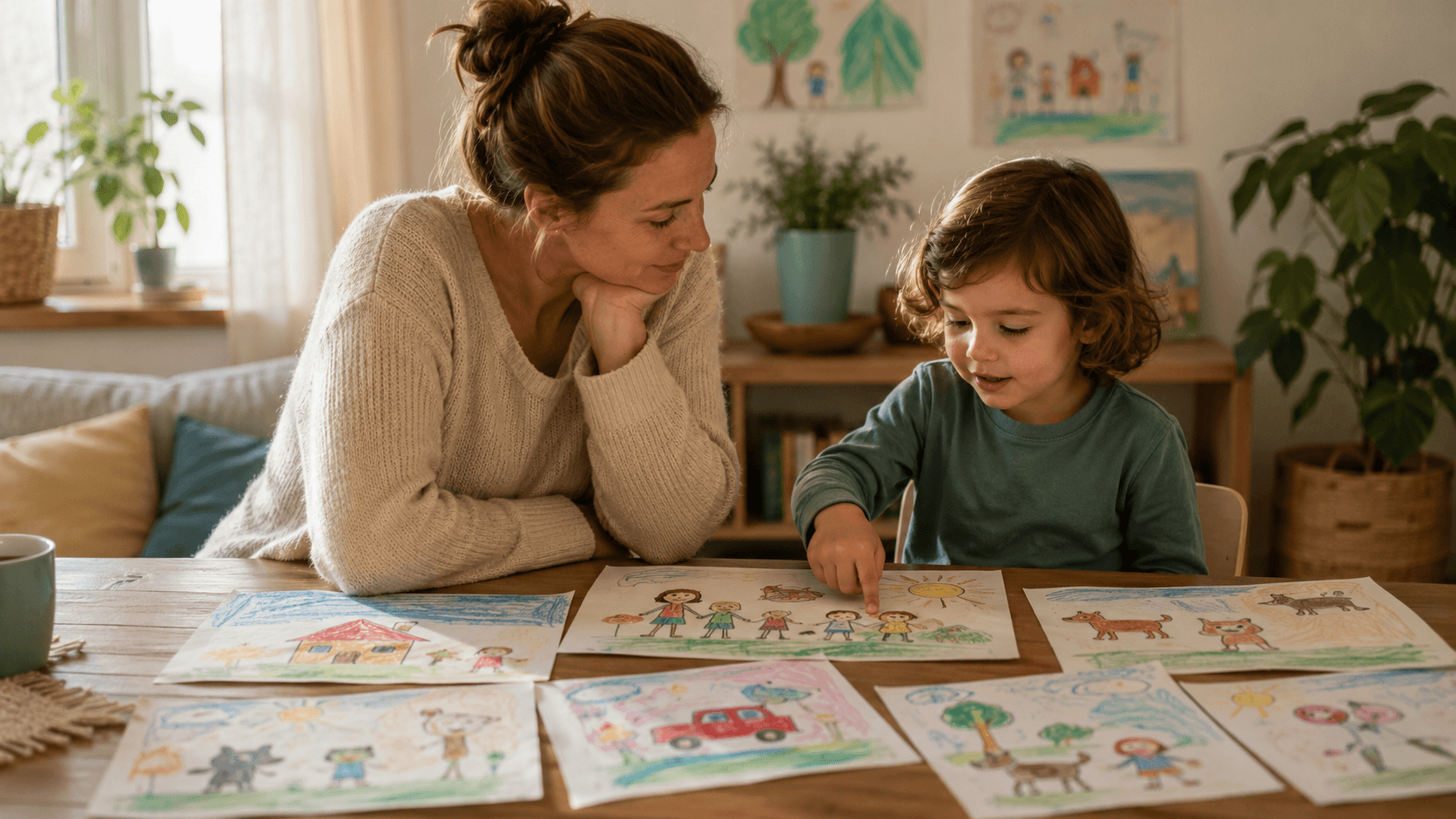
Children often have much more to say about their drawings than adults expect.
The tricky part is asking in a way that leaves room for their story.
A drawing conversation should feel light, curious, and safe. It should not feel like an interview.
Why Leading Questions Can Change the Conversation
Questions such as “Is this person sad?” or “Did you draw this because you were angry?” already suggest an answer.
A child may agree simply because an adult introduced the idea.
A better approach is curiosity without guessing.
Start With Simple Invitations
Try:
- “Tell me about your picture.”
- “What is happening here?”
- “Who would you like to tell me about first?”
- “What happens next?”
These questions allow the child to decide what matters.
Follow the Child’s Words
If your child says, “This is a storm,” you might ask, “What happens during the storm?”
Instead of deciding what the storm represents, stay inside the story they are telling.
This approach fits the broader idea of observing children’s drawings without treating them as diagnoses.
Do Not Ask Too Many Questions
A drawing does not need to become a long conversation.
Some children love explaining every detail. Others prefer to draw quietly and move on.
If your child gives short answers, that is fine. Interest should feel supportive, not demanding.
Questions to Use Carefully
Try not to begin with assumptions such as:
- “Why is this scary?”
- “Why did you leave Dad out?”
- “Does this mean you are sad?”
The goal is to hear the child’s explanation before adding an adult interpretation.
What Parents Can Do
- Let the child lead the explanation.
- Use open-ended questions.
- Avoid correcting or over-explaining.
- Accept “I don’t know” as a valid answer.
- Keep the conversation relaxed.
Key Takeaways
- Open questions give children room to tell their own stories.
- Follow the child’s words instead of introducing meanings.
- Not every drawing needs a long conversation.
- Curiosity works better than interrogation.
Frequently Asked Questions
What if my child says “I don’t know”?
That is a complete answer. You can enjoy the drawing without pushing for an explanation.
Should I ask about unusual details?
You can ask neutrally: “Tell me about this part.” Avoid suggesting that the detail must have a hidden meaning.
Can talking about drawings help communication?
Yes. Drawings can offer a comfortable starting point for everyday conversations, especially when the child is allowed to lead.