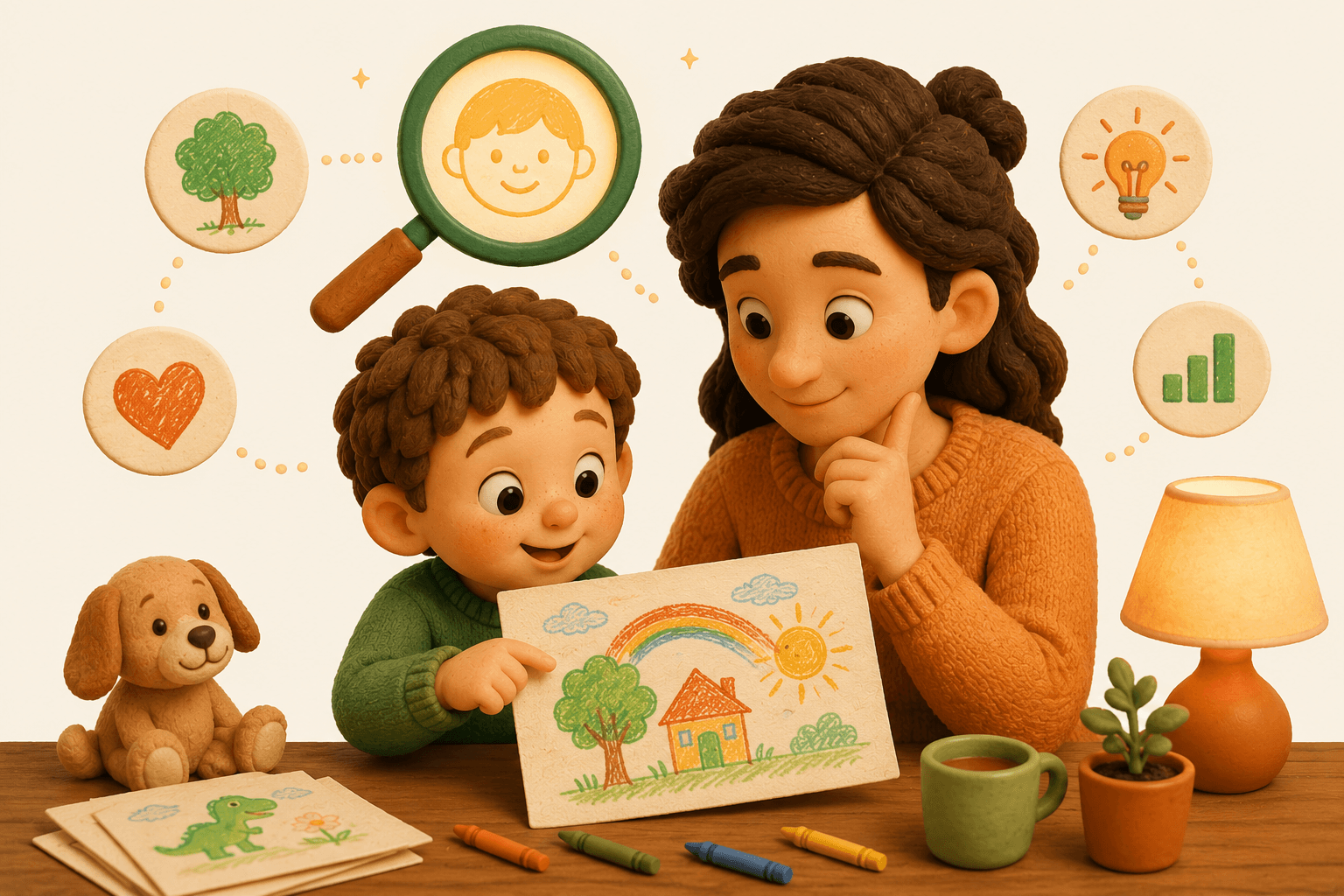
Most parents have looked at a drawing and wondered: “Is my child trying to tell me something?”
Maybe it is a family picture. Maybe it is a house that appears again and again. Maybe it is a drawing filled with bright colors, or maybe it uses only one color.
Questions like these are very normal. Children often express themselves through drawing before they can explain every thought or feeling with words. That is one reason their artwork can feel so meaningful.
So what is child drawing analysis?
Child drawing analysis is simply the practice of observing children’s drawings to better understand their interests, stories, development, and creative expression. The key word is observing. It is not about diagnosing a child or finding hidden messages in every picture.
A drawing may show what a child enjoys, what they noticed that day, what they are practicing, or how their imagination works. For example, a child who loves animals may draw dogs, cats, and birds for weeks. Another child may keep drawing houses because they enjoy the structure and feel confident drawing them.
What drawings can help parents notice:
- Favorite subjects and interests
- Growing drawing skills
- Storytelling ability
- Attention to detail
- Changes in confidence
- Repeated themes over time
What one drawing cannot tell you:
- Exactly how a child feels
- Whether a child is anxious or sad
- Whether a child has experienced something difficult
- A complete picture of a child’s personality
This is where many people overthink children’s drawings. A single picture is only one moment. Children draw for many reasons. Sometimes they draw something because they saw it that day. Sometimes because they enjoy it. Sometimes because it was simply the first idea that came to mind.
A better approach is to look at patterns. If you save drawings over time, you may start to notice how your child’s ideas, skills, and favorite themes change. That is often much more helpful than trying to interpret one picture by itself.
The best thing parents can do is ask simple, open questions:
- “Can you tell me about your picture?”
- “What is happening here?”
- “Who is this?”
- “What happens next?”
Often, children explain their drawings in a way adults would never guess.
The goal is not to decode your child. The goal is to stay curious, listen, and create space for expression.
Key takeaways:
- Child drawing analysis is about observation, not diagnosis.
- Drawings can reflect interests, creativity, and development.
- One drawing rarely tells the whole story.
- Patterns over time are usually more meaningful.
- Asking your child about the drawing is often the best place to start.
Children’s drawings are small snapshots of how they see the world. The most valuable insights often come from paying attention, staying curious, and letting the child lead the story.
One Reply to “What Is Child Drawing Analysis?”